When Compliance Becomes Its Own Compliance Problem: Untangling Regulatory Complexity Across the Enterprise
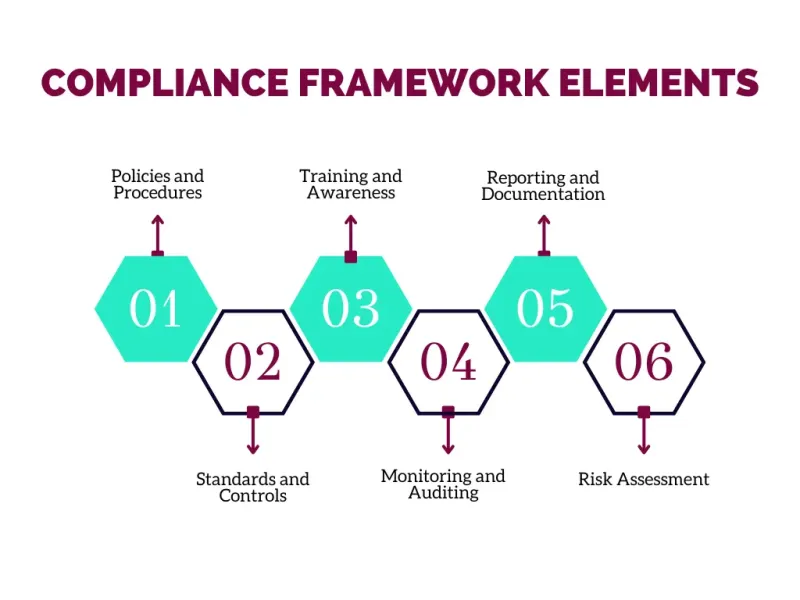
Photo: corporate legal compliance documents regulatory framework office, via www.metricstream.com
Compliance is not optional. That much is understood across every serious enterprise. What is less well understood is the degree to which compliance programs, left unmanaged, evolve into sprawling, redundant infrastructures that cost far more than the regulations they address actually demand.
For large organizations operating across multiple US states, federal jurisdictions, and international markets, regulatory fragmentation is a genuine operational challenge. But the greater challenge — and the more costly one — is often internal: the accumulation of compliance frameworks that were built in isolation, maintained in parallel, and never rationalized against one another.
The result is a form of self-imposed complexity that consumes legal, finance, and operational resources without delivering proportionate protection.
How Regulatory Fragmentation Takes Hold
The origins of compliance sprawl are rarely malicious and almost never strategic. They are the predictable outcome of how large organizations grow.
A company expands into a new state and builds a compliance function to address that jurisdiction's specific requirements. An acquisition brings an entirely separate compliance architecture from the acquired entity. A new federal regulation arrives, and a cross-functional team builds a response framework without first auditing whether existing controls already satisfy most of the requirement. Over time, these structures layer on top of one another.
Each layer made sense when it was created. Collectively, they create a compliance estate that no single person or team fully understands — and that almost certainly exceeds what is legally required by a significant margin.
A 2023 survey of compliance officers at US enterprises with more than 5,000 employees found that a majority estimated their organizations maintained at least two overlapping frameworks addressing materially similar requirements. Nearly a third estimated that overlap at three frameworks or more.
The Operational Cost of Redundant Compliance Infrastructure
Redundancy in compliance is not merely an aesthetic problem. It carries concrete operational costs that appear across multiple budget lines.
Audit duplication. When similar requirements are housed in separate frameworks, they generate separate audit cycles. Legal and finance teams conducting parallel reviews of overlapping controls are spending resources that a consolidated framework would eliminate.
Documentation overhead. Compliance documentation that serves multiple frameworks independently — rather than being maintained once and applied across frameworks — multiplies the administrative burden on already-stretched teams. In large organizations, this can represent dozens of FTE hours per week that produce no incremental compliance value.
Inconsistent interpretation. Separate compliance teams operating under separate frameworks often develop divergent interpretations of the same regulatory requirement. This inconsistency creates internal friction, complicates enterprise-wide reporting, and can create exposure during external audits when regulators observe contradictory internal positions.
Vendor and technology redundancy. Compliance programs built in isolation frequently procure separate GRC platforms, legal research tools, and training systems. The technology overhead of a fragmented compliance estate frequently mirrors — and compounds — the human overhead.
Identifying Where Consolidation Is Feasible
Not all compliance requirements are equivalent, and not all overlap is addressable. Consolidation strategy must begin with a disciplined mapping exercise that distinguishes between genuine jurisdictional variation and redundancy that exists purely as an artifact of organizational history.
The mapping process should address three questions for every active compliance framework:
What regulation or standard does this framework address? Many internal frameworks are traced to a specific regulatory trigger, but upon examination, the underlying regulation has been superseded, amended, or interpreted more narrowly than the internal framework reflects. Frameworks built to address a 2015 regulatory concern may be significantly over-engineered relative to the current regulatory environment.
What other frameworks address materially similar requirements? This is the consolidation opportunity question. Where two or more frameworks impose controls on substantially the same risk domain, a single rationalized framework can typically satisfy both without increasing exposure.
What is the cost of maintaining this framework independently? Assigning a resource cost to each framework — including staff time, technology, and audit cycles — creates the business case for consolidation. Organizations that have completed this exercise routinely discover that 20 to 35 percent of their compliance operating budget addresses requirements already covered elsewhere.
A Consolidation Strategy That Reduces Burden Without Increasing Risk
Compliance consolidation is not deregulation. The goal is not to do less compliance — it is to do the same compliance more efficiently, with less redundancy and greater organizational clarity.
Effective consolidation programs typically proceed in three phases.
The first phase is rationalization: completing the framework mapping exercise described above and identifying the specific overlaps, redundancies, and outdated requirements that represent consolidation opportunities. This phase should involve legal counsel, the compliance function, and operational leadership — not legal alone.
The second phase is architecture: designing a consolidated framework that satisfies all applicable requirements across jurisdictions and business units. The architecture should be built around the most stringent applicable requirement in each domain, ensuring that a single set of controls provides coverage across all relevant jurisdictions without requiring separate maintenance.
The third phase is governance: establishing the internal accountability structures that will prevent compliance sprawl from re-emerging. Without a designated owner responsible for monitoring regulatory changes and assessing their impact against the consolidated framework, organizations tend to revert to additive behavior — layering new frameworks on top of existing ones rather than integrating changes into the established architecture.
The Strategic Case for Proportionate Compliance
There is a tendency in enterprise legal and compliance functions to equate complexity with rigor. More frameworks, more controls, and more documentation feel safer than a rationalized, proportionate alternative.
But complexity in compliance creates its own risks. Overly complex frameworks are harder to maintain consistently, more difficult to communicate to operational teams, and more likely to contain internal contradictions that create exposure during regulatory examination.
Proportionate compliance — frameworks calibrated to what regulations actually require, maintained with discipline and reviewed regularly — is both less expensive and more defensible than the sprawling alternative many enterprises have constructed.
For organizations prepared to invest the analytical work required to understand what they have built, the savings available through consolidation are substantial. More importantly, the operational clarity that follows rationalization tends to improve compliance outcomes across the board — which is, after all, the original purpose.